On “soft” skills
It’s fascinating how the skills some people call “soft” seem remarkably hard for them to learn.
They’re not soft. They’re not hard. They’re human — and we’ve been undervaluing them because we confused measurability with importance.
Building trust. Navigating conflict. Making someone feel seen at the moment they needed it most. Inspiring people who have every option to ignore you.
No algorithm does that.
Call them soft if you want.
Just don’t be surprised when the most technically brilliant person in the room can’t get anyone to follow them anywhere.
WHAT’S YOUR SUNRISE?
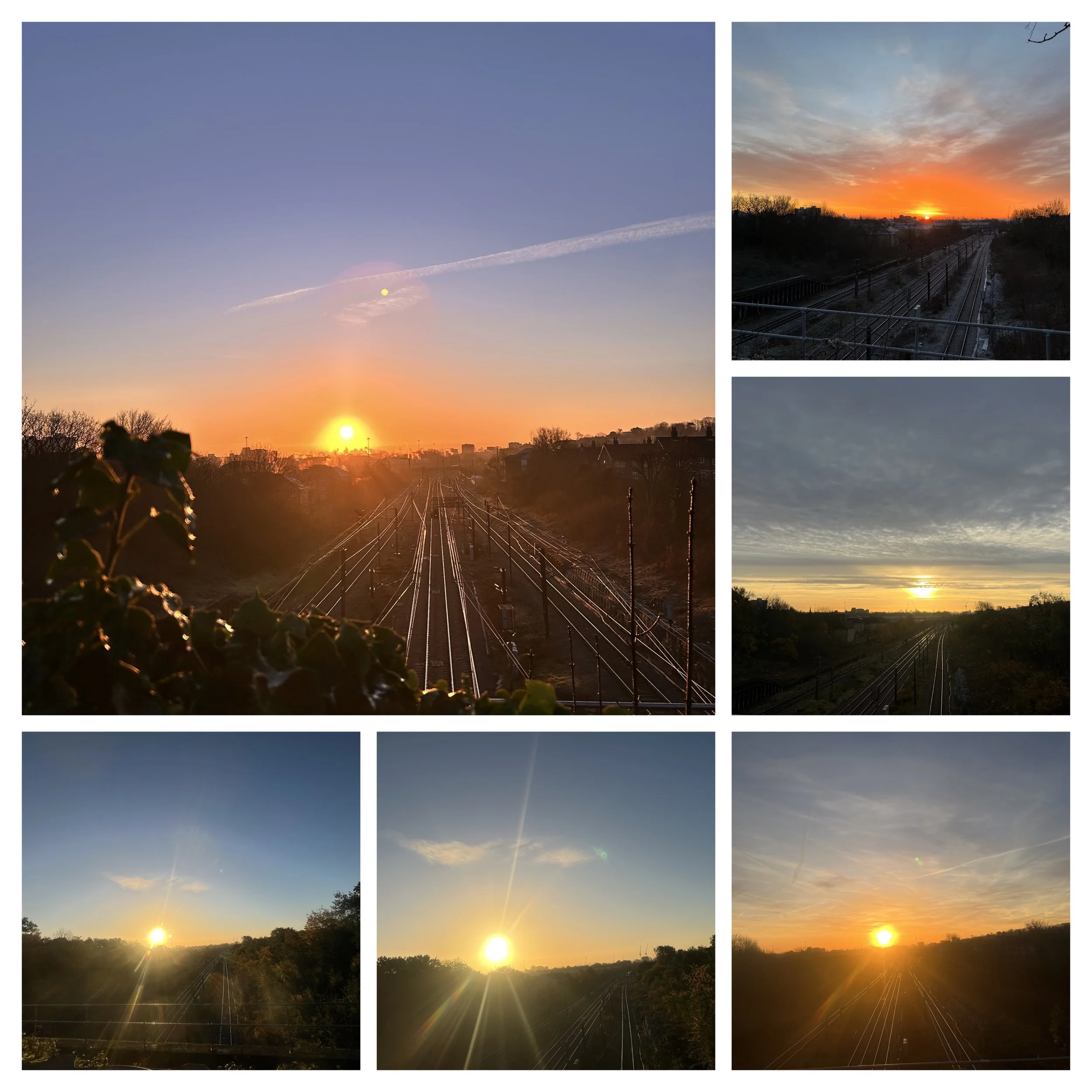
I really struggle in January: the cold, the dark and the post-holiday blues tend to get me down.
But in January, on the way to the tube in the morning, I can see the sun rise over the train lines in a way that is nearly always magical.
It’s the only time of year when the sun is in the right place to create this view, so it becomes something to be savoured.
On these days, I try to stop, and take a photo of the rising sun. To enjoy the moment and drink in the wonderful colours.
It’s a reminder to look for the small things that are special and to take the time to enjoy them. To scratch the mundane surface and see what’s underneath.
What’s your January sunrise? What gets you through your versions of the cold and the dark?
WHAT’S YOUR SUNRISE?
I really struggle in January: the cold, the dark and the post-holiday blues tend to get me down.
But in January, on the way to the tube in the morning, I can see the sun rise over the train lines in a way that is nearly always magical.
It’s the only time of year when the sun is in the right place to create this view, so it becomes something to be savoured.
On these days, I try to stop, and take a photo of the rising sun. To enjoy the moment and drink in the wonderful colours.
It’s a reminder to look for the small things that are special and to take the time to enjoy them. To scratch the mundane surface and see what’s underneath.
What’s your January sunrise? What gets you through your versions of the cold and the dark?
Scale Matters
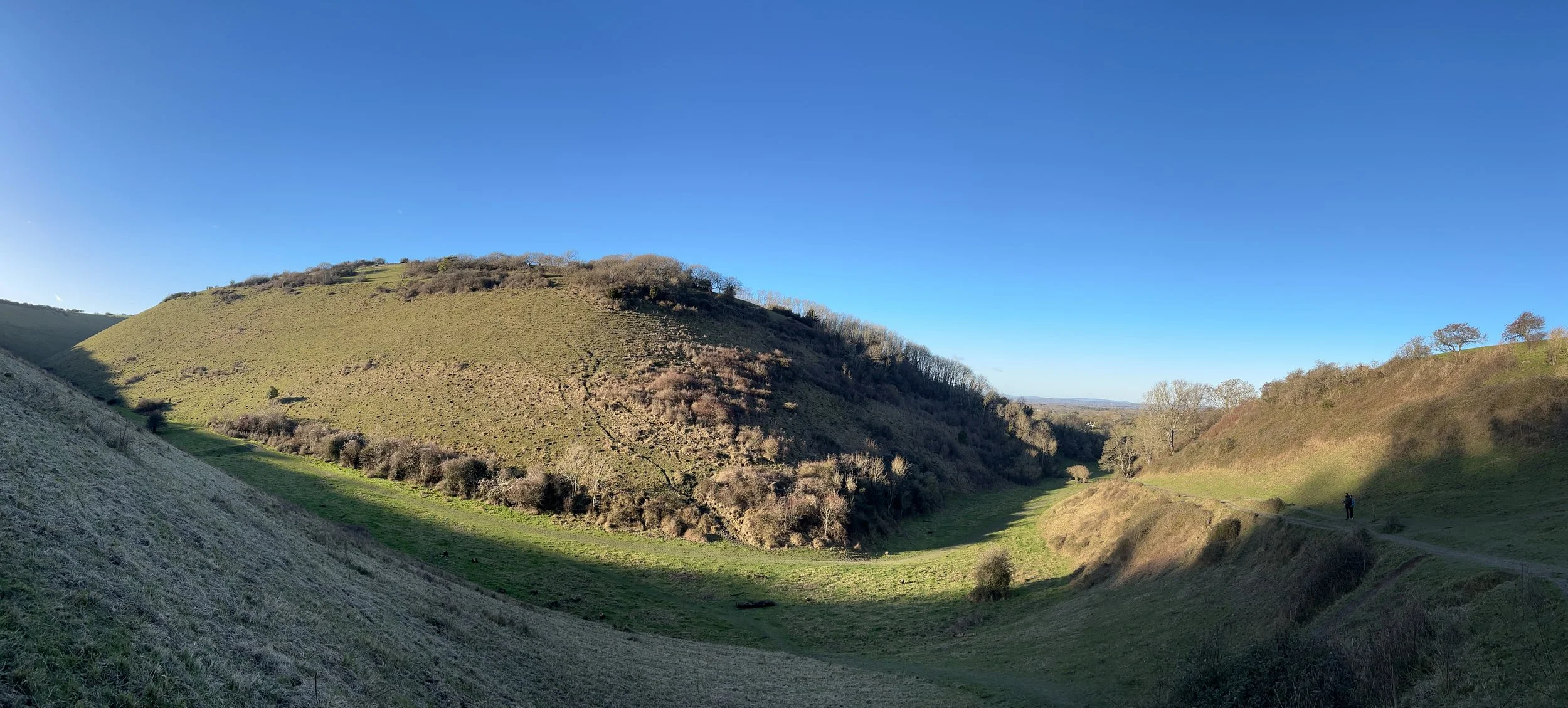
It’s difficult to get a sense of scale on paper. The numbers, lines or words and are an abstraction and at their best, only represent certain, key aspects of the whole.
Sometimes you have to stand next to it, to look into it, or up at it.
The scale means something different when you’re there and can feel it.
Cities often close off or sense of scale, which is why leaving them on occasion can be so lovely.
Anyhow, Devil’s Dyke just outside Brighton is wonderful but really has to be experienced directly to be appreciated.
Scale Matters
It’s difficult to get a sense of scale on paper. The numbers, lines or words and are an abstraction and at their best, only represent certain, key aspects of the whole.
Sometimes you have to stand next to it, to look into it, or up at it.
The scale means something different when you’re there and can feel it.
Cities often close off or sense of scale, which is why leaving them on occasion can be so lovely.
Anyhow, Devil’s Dyke just outside Brighton is wonderful but really has to be experienced directly to be appreciated.
The answer to “why?” is just a story

Why did you buy a coffee?
I was thirsty
It’s a habit
Wanted caffeine
Needed the social interaction
The answer might be any or all of these but I don’t know the answer any more than you do.
We’re storytellers and confabulators who have convinced ourselves we know the truth.
But that’s just another story that we’ve told ourselves.
The truth Is that we don’t know. But as soon as we’re asked and we give an answer which becomes our truth.
So if our answers are all stories, who cares? What’s the relevance?
It matters because not all stories serve us, or those around us.
What stories are you telling and what do they say about how you see the world?
The streaks don’t matter
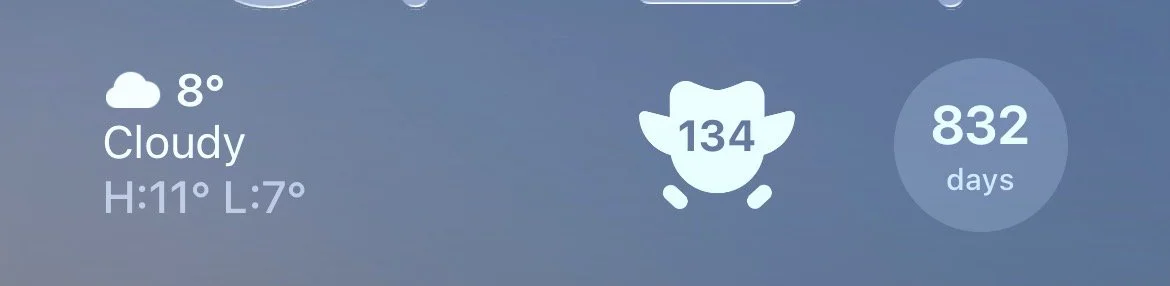
Mine are Duolingo and days not drinking, but they can be about anything: exercise, food, gambling, drinking, mediation or yelling at seagulls.
While they can a motivating force, the streaks themselves aren’t important - they’re just a carrot (or a stick).
The important thing is picking ourselves up when we break one. When the counter resets to a goose egg and we have to make that horrible a leap from zero to one all over again.
That leap between nothing and something - the spark between the terminals - that is where the magic is.
As we come into a time of year when it’s hard to protect all our rituals and routines - let’s remember that the numbers themselves aren’t important. It’s what we do with them that counts.
At least the Robber Barons build things
The Robber Barons of the late 19th century might have been horrible people, but even they might compare favourably to the titans of today.
The “robber barons” of the late 19th and early 20th century have a deeply conflicted legacy.
On one hand, they were ruthlessly exploitative and monopolistic – squeezing everything possible out of an underclass for personal gain.
On the other hand, they built and funded a huge amount of hard infrastructure and public goods that we still benefit from today.
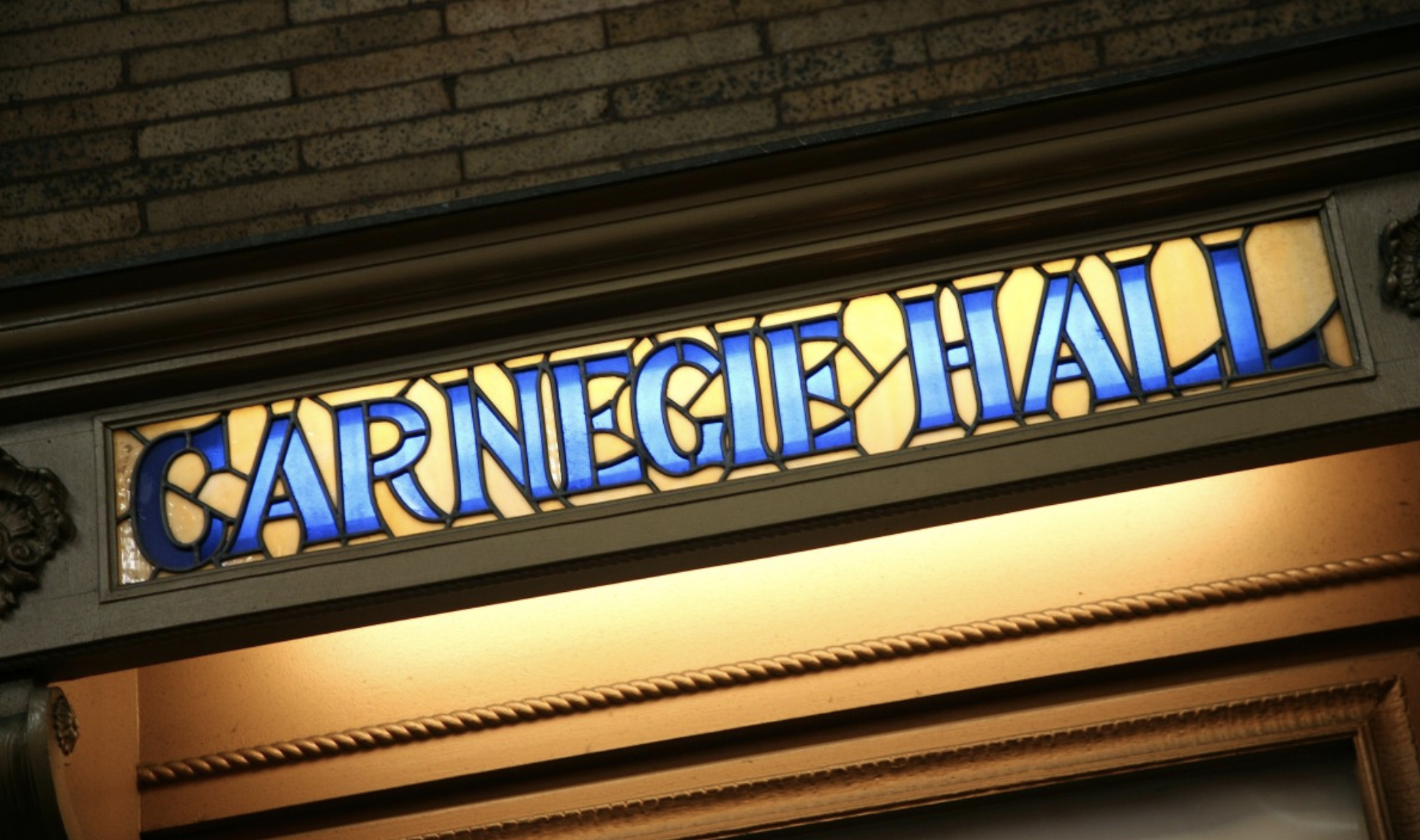
Andrew Carnegie alone funded over 2,500 public libraries across the world – many of which are still operating today.
And yet, we still call Carnegie and his peers “robber barons.”
🔍 Which makes me wonder:
What will we call the titans of today?
We’ve seen an unprecedented concentration of wealth in a small number of individuals and companies. They’ve invested enormous energy into amassing unfathomable fortunes – but far less into building the kinds of shared institutions, public spaces, and cultural infrastructure that outlast them.
If Carnegie could point to libraries, museums, and universities… what will this era’s billionaires point to?

Nothing changes, until it all does
Some systems change in a linear fashion. A little pressure, a little movement; more pressure, more movement.
But some other systems are more resistant to change. They have defensive structures that are strong in the direction of their main opposing force. No amount of pressure seems to make a difference to these systems as they resist all attempts to make change.
But even these behemoths succumb over time.
Sometimes it’s because the expected pressure accrues gradually but consistently until a tipping point is reached and the system’s great defences can’t hold up.
But other times it’s because new pressure is applied from a different direction and the brittleness of the system is revealed.
When pushing against these systems it can be easy to lose heart in the face of what seems like impregnable defences. A disruptive force from an unexpected direction can be a great catalyst for change.
Unfortunately, sometimes the systems we seek to change will outlive us.
And so when changing the status quo we need to put ourselves on a longer time horizon and play a longer game than those defending it.
Because for the longest time it will seem like nothing changes, until suddenly it all does.

Dogs in Jumpers
Many things look ridiculous from a distance…
If you own a short haired dog and live in a country that gets cold, you might put it in some kind of jumper when the temperature drops.
For those who own the dog, this makes sense - they want to keep the dog warm - and not all dogs can stay warm without help.
For others, it can look mysterious, ridiculous, unnecessary and a waste of money.
Proximity to the problem is relevant as the closer we are, the easier it is to understand the stakeholders.
Of course, many things are actually ridiculous- the trick is to be able to tell them apart from dog in jumpers on a cold day.

Of course you might understand or agree, but it could still look ridiculous.

Two sides might not be enough
When thinking about important issues or situations, we’re encouraged to consider both sides. What are the pros and cons? What are the arguments for and against?
And while pushing ourselves to consider different perspectives is important, it’s important for us to remember that not everything is a duality.
If we naturally fall on one side of a an issue, we might consider the counter argument just to pressure test our thinking – but we rarely take a 360 degree look at the issue from all the angles.
360 thinking on a topic might seem like a luxury – it certainly takes more time to consider than taking just one or two perspectives – but it has a power that we often overlook. Many issues, particularly the important ones, have a variety of perspectives that are beneficial for us to understand if we want a fulsome and nuanced understanding of what’s going on.
In fact, 360 thinking can be most powerful when applied to issues where it seems like there are only two sides. It creates space around the direct opposition and allows groups a better chance of finding common ground.
If we want to build better understandings of the world around us, then we need to take the time to observed it in a more comprehensive fashion. 360 thinking isn’t a panacea, but it’s a great thought experiment to expand our horizons and become better thinkers.

That’s great, but what about the real world?
It’s important to know the theory.
“Understanding the concept” makes planning, knowledge transfer and improvisation all possible. But it has a limit.
If we can’t take that theory and practically apply it to the real world, then it’s just an exercise of fancy.
Bringing our ideas and concepts to life, making them tangible and allowing them to interact with the real world is the crux of any skill.
For those bodies of our knowledge which reside only in the realm of theory, when will we let them make the jump into the real world?

The tyranny of distance (another meaning)
From a distance, everything looks simpler. It’s only when we get close to a problem that the detail and nuance is truly revealed.
For this reason, our armchair speculation is of limited value. From our vantage point, the solution looks obvious, but we can’t see all of the complexity that’s at play.
Being able to see the big picture is important. But so is being able to appreciate the critical details which are only visible at the coal face.
It might look easy from afar. It might even be easy. But we should maintain a healthy respect for the opinions of those who are actually in the detail and listen when they tell us that “it’s not that easy”.